

How did we decide what we would need?
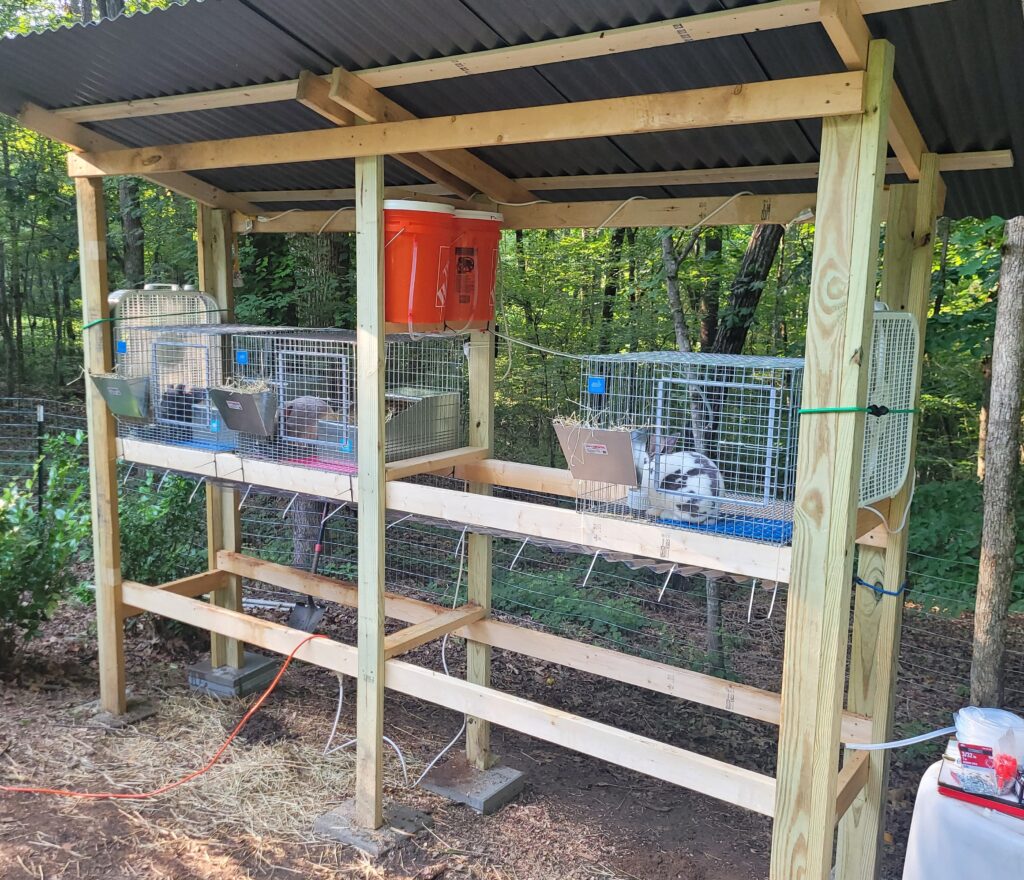
Once we made the decision to purchase our original 3 rabbits, we knew we would need a sturdy hutch to shelter them in. We also knew we would be breeding for show, so we would need extra room to house babies, and breeding stock. We were only starting with 2 females and a male, but the average litter size for a rabbit is up to 10 kits, and everyone knows the reputation of rabbits… so, we decided to start with an 8 cage hutch. That gave us 5 empty cages to sort, save, and house baby rabbits.
When we picked up our first rabbits, we also purchased all of the cages and equipment that our friend was using. She had a barn, and was able to house hers differently than we were planning to. We used those cages, a few cinder blocks and some creative rope work to put up a tarp roof for some temporary shelter while we worked out the details of the hutch we were planning to build. Because of the hutch design we liked, we knew the cages we had wouldn’t work. We also quickly figured out that we did not like water bottles, and started looking at a nipple system.
CAGES
For the cages, we did a lot of research, and found KW Cages. They have a great reputation for using quality materials, and assembling sturdy cages. We watched a lot of videos, and read a lot of articles, considered building our own, and decided that although there were cheaper options out there, we were in this for the long haul and were willing to pay for quality. After a lot of comparison shopping and reading of reviews, we knew that cages from KW would be a one and done purchase, and that with a little care these cages would last us a long time. They use galvanized wire (which is important when dealing with rabbit urine), and there was upgrade options for both a heavier gauge bottom wire, and “baby saver” sides. The heavier bottom is necessary for a heavier rabbit, especially if the cages are suspended, and the baby saver sides will help to keep your kits from breaking any legs.
We also considered how big we wanted our cages. There’s a lot of size options, but we settled on 24″x24″x18″ cages. This kept things manageable, so that if anyone had to move cages for maintenance, or an emergency, my wife could move them, with rabbits inside, if she needed to.
HUTCH
For the hutch, we looked at a lot of options, and really liked a design from Teal Stone Homestead. She obviously put a LOT of thought into her design, and it’s really nice, but we decided to make a few changes to better suit our needs. For one, I wanted the fewest number of cuts possible, with as little waste as possible. I only have a regular power saw, so I didn’t want to make any angled cuts. Everything is either 10′, 8′ or 2′, except the back posts. I also altered the roof design so that I don’t have to make angled cuts, and I used a different roofing material. I also made mine to have a lot of storage room in the top for my water system, nesting boxes and travel cages. I also designed my “poop chute” that protects the bottom cages from the top cages a little differently, and again, with different materials. I will go into much more detail in a future post. I’ve provided a link to her video below.
Teal Stone Homestead Rabbit Hutch Video
WATER
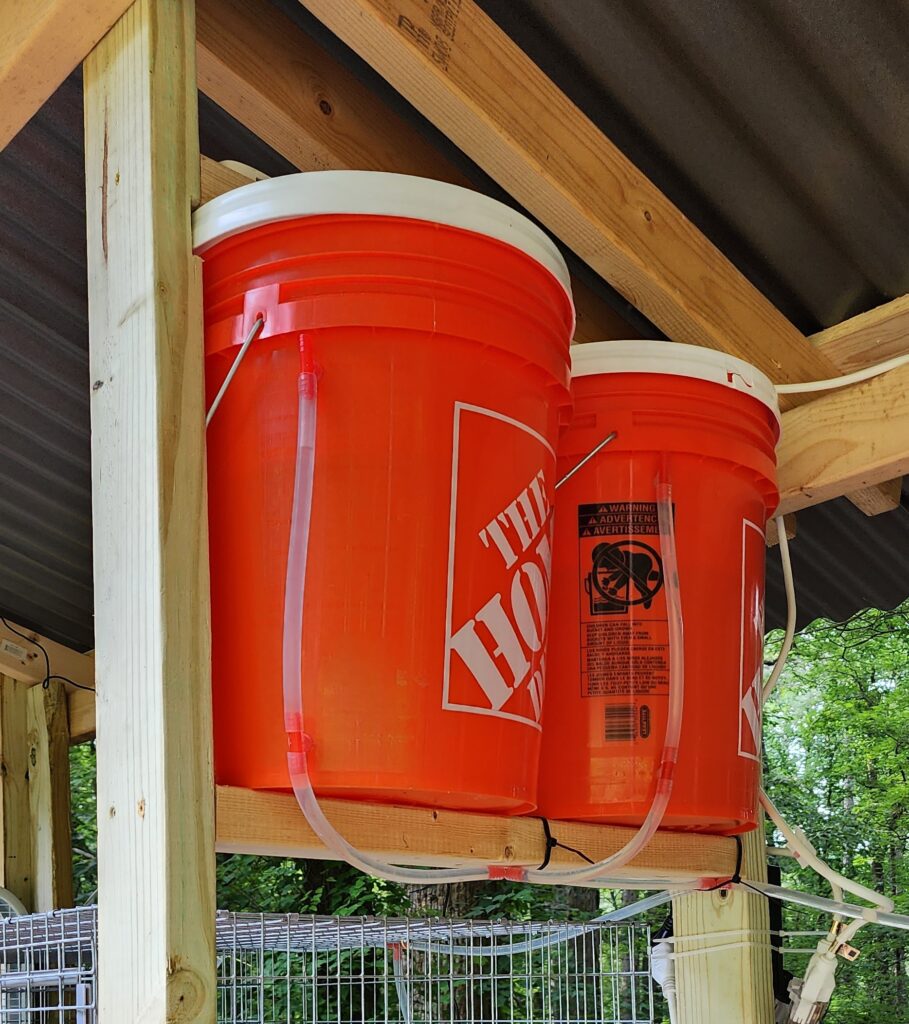
For our water system, we opted for nipples and tubing. Refilling bottles every day is time consuming, and something we did not want to do. So, we started off small, with cheap Chinese nipples from Amazon, and they’ve proven to be pretty sturdy. We currently have 15 gallons of capacity, which lasts us anywhere from a week to 2 weeks, depending on how many kits we are housing. Also, against everyone elses advice, we use clear tubing. There are advantages and disadvantages to this entire system compared to individual bottles. I will have a whole post on how I assembled my system, and why we chose what we did in the very near future, but I will tell you, if you like to go on the occasional vacation, and don’t have someone to tend to your animals, a bulk system like ours is a life saver.
My next blog post will outline our initial costs. Thanks for reading!